

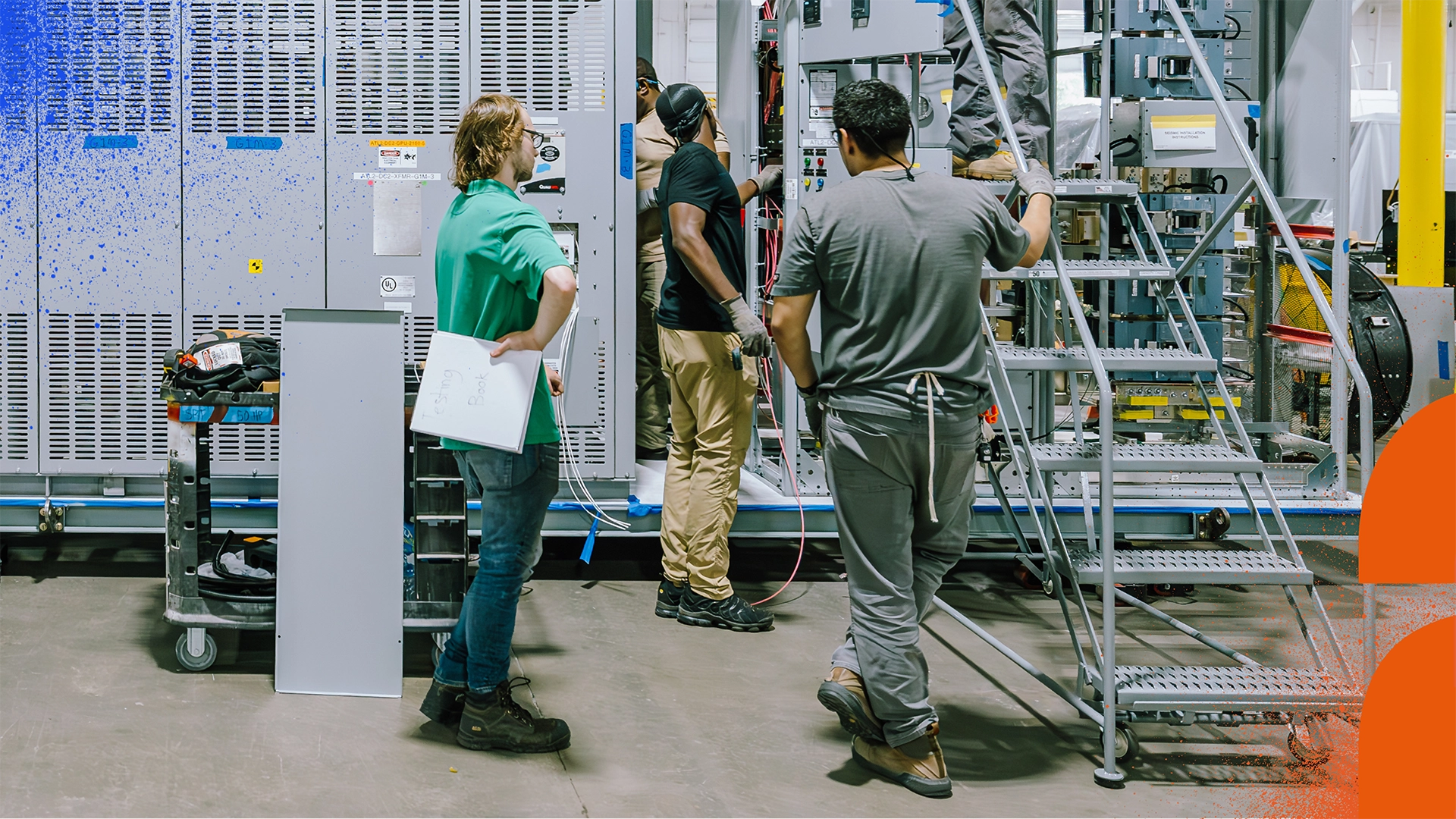
Behind every completed project is a workforce that turned plans into something real. It’s easy to look at a data center, hospital, manufacturing facility or major commercial project and focus on the finished product. What’s harder to see are the early mornings, multiple shifts, years of experience and countless decisions that brought it to life.
Spending time on job sites and in prefab shops has deepened our appreciation for the skill and commitment behind that work.
A 6:00 a.m. shift start doesn't mean the day begins at 6:00. Crews may arrive well before sunrise, while prefab operations can run multiple shifts late into the evening. Behind those hours is experience built over years. Senior foremen lead crews and solve problems in real time. Journeymen bring deep knowledge to their craft, while apprentices learn alongside those who came before them.
Construction also offers something unique: progress you can see. At the end of a shift, something has been installed, connected or completed. There is pride in being able to step back and see what your crew accomplished.
Every successful project depends on people across the business, including estimators, engineers, project managers, operations teams and executives. But every schedule, estimate and drawing eventually has to work where the building happens.
The same is true for construction technology. Better labor data, visibility and reporting are valuable, but they depend on a more fundamental question:
A foreman managing a crew shouldn't have to choose between moving the project forward and keeping a system updated. Technology should fit the realities of the job site, not add another layer of administration to it.
That matters beyond ease of use. When people don't trust the process, it becomes difficult to trust the data it produces. The best technology captures what the business needs while staying out of the way of the work.
Construction is being asked to deliver at an extraordinary scale, from data centers and advanced manufacturing facilities to hospitals and critical infrastructure. Technology, data and automation will help the industry meet that demand, but they don't replace the people who know how to build.
At BuildTime, time spent on projects continues to shape how we approach our work. Listening to foremen and crews gives us a clearer understanding of what technology should and shouldn't ask of them.
The goal isn't more technology in the field. It's better technology that respects people's time, supports the work and then gets out of the way.






Please complete your information to start your free BuildTime trial.
BuildTime offers a 90-day free trial for new customers.
Your first payment is due on the first day of the month following the end of your trial period.
If your trial ends partway through a month, your first bill will be prorated based on the number of days between the end of the trial and the start of the next billing month.
After the trial period, monthly billing occurs in arrears based on your actual usage during the prior month.
Billing is calculated from the number of Tracked Employees in your BuildTime account during that billing month.
A Tracked Employee is any individual employee, contractor, or similar person engaged by your organization (such as a crew member or supervisor) who has at least one time entry recorded in the BuildTime Platform during the month.