

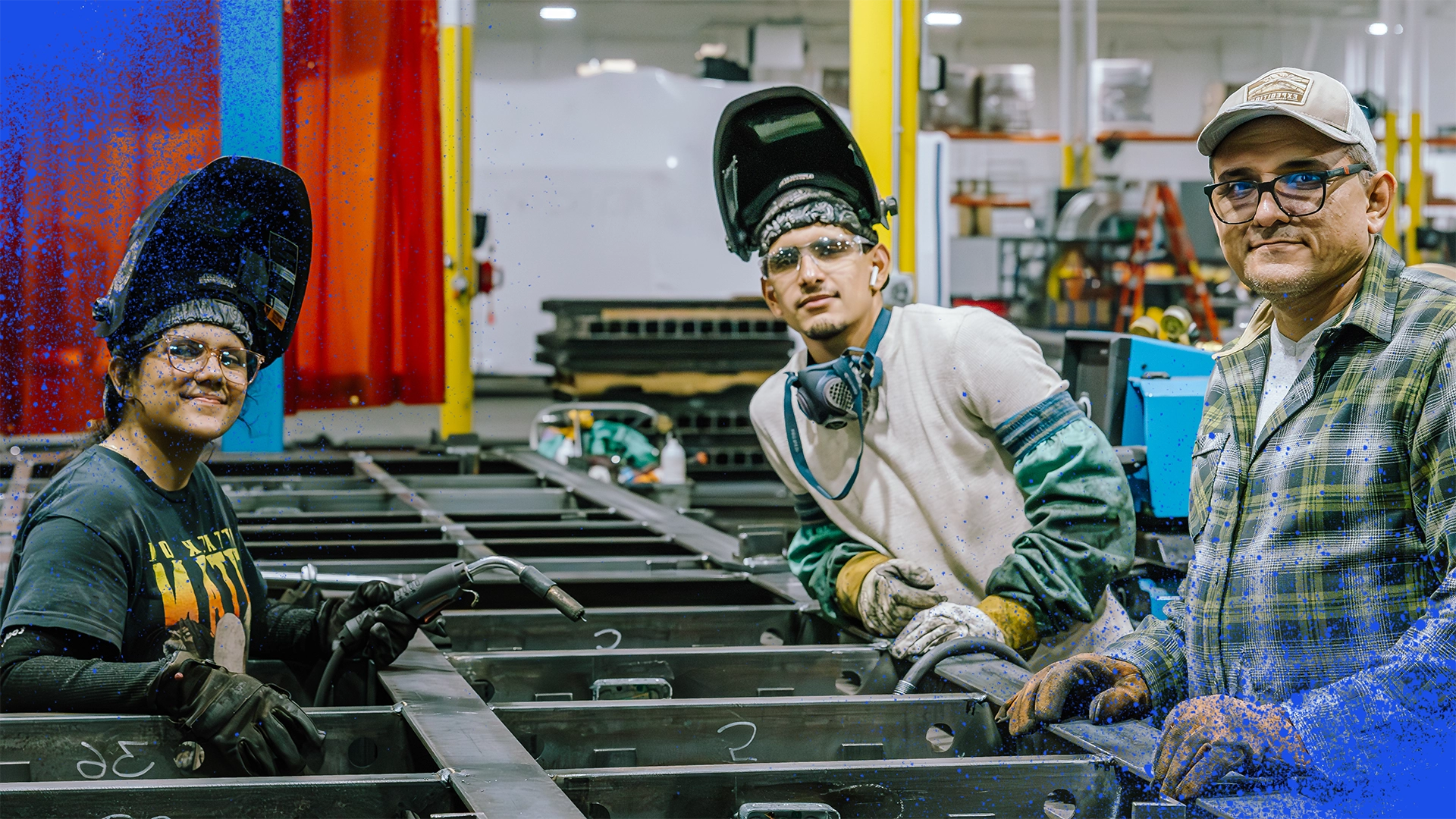
The electrical construction industry has always been competitive. Contractors compete for projects, pursue the best talent, and push to deliver work faster, safer, and with higher quality. Competition has driven innovation for generations, and that's a good thing. It challenges companies to improve, adapt, and continually raise their standards.
But competition alone has never been what moves an industry forward. Collaboration does.
One of the most overlooked strengths of the electrical industry is its willingness to share knowledge. While companies may compete on bid day, it's not uncommon to see those same companies exchanging ideas at conferences, opening their prefab facilities to one another, participating in roundtable discussions, or speaking together on industry panels. That isn't giving away a competitive advantage. It's recognizing that some challenges are bigger than any one company.
The labor shortage, developing the next generation of foremen, improving safety, increasing productivity, embracing new technology, and finding better ways to support field teams aren't any one contractor's problems. They're industry challenges, and industry challenges require industry collaboration.
Companies like Whitehead Electric, Allison-Smith, Inglett & Stubbs, United Electric, and many others have demonstrated that it's possible to compete fiercely while remaining committed to advancing the electrical industry as a whole. Sharing lessons learned, opening doors to new ideas, and participating in conversations that benefit everyone doesn't make a company weaker. It makes the industry stronger.
The best ideas don't always come from within an organization's own walls. Sometimes they come from a conversation at a conference, a jobsite tour, a prefab walkthrough, or a discussion between contractors facing the same challenge from different perspectives. Those moments create something far more valuable than a competitive advantage: they create progress.
This shows up in real ways. It shows up in better hiring, because contractors who share what's working attract and train talent faster than those working in isolation. It shows up in safer jobsites, because a lesson learned on one crew doesn't have to be relearned the hard way by another. And it shows up in faster, smarter prefab, because a walkthrough or a shared process shaves time off a schedule that no single company could shave off alone.
As projects grow in complexity and schedules become more demanding, collaboration will become one of the industry's greatest advantages. The strongest companies will always find ways to compete. The strongest industries are the ones still asking what they can learn from each other.
So here's the question worth asking your own team: where could one shared conversation save you a hire, a near-miss, or a week on the schedule?






Please complete your information to start your free BuildTime trial.
BuildTime offers a 90-day free trial for new customers.
Your first payment is due on the first day of the month following the end of your trial period.
If your trial ends partway through a month, your first bill will be prorated based on the number of days between the end of the trial and the start of the next billing month.
After the trial period, monthly billing occurs in arrears based on your actual usage during the prior month.
Billing is calculated from the number of Tracked Employees in your BuildTime account during that billing month.
A Tracked Employee is any individual employee, contractor, or similar person engaged by your organization (such as a crew member or supervisor) who has at least one time entry recorded in the BuildTime Platform during the month.